
Not anime related but absolutely worth a read for any fan of games or music. Some of the best and more interesting soundtracks on here.
I’ll be finishing up some posts soon!
Not anime related but absolutely worth a read for any fan of games or music. Some of the best and more interesting soundtracks on here.
I’ll be finishing up some posts soon!

It’s an often used statement to say that everything that can be invented already has been. To an extent, I feel that this is true. There’s been a lot of history of mankind to contend against if you want to invent a new idea. Specifically for creative fields like writing, films, and different forms of media, this can definitely feel like it’s the case, especially these days when we’re getting remakes of remakes all the time from Hollywood and television. (Did we really need another Fantastic Four? I mean, the first one was alright but that last one was just horrifying.)
However, even if a plot or setting has been done before, that doesn’t mean that we can’t find new and creative ways of working with those ideas. Iterating or innovating on an idea can be as  great a show of genius or craft as creating something entirely new. A famous example of this is The Lion King, which borrows heavily from Hamlet both in plot and characters, but you’d never hear someone complain that it’s just a rehash of the same thing. Both Disney’s animated classic and Shakespeare’s wonderful play may share a lot in common but both also are able to stand on their own as great and incredibly entertaining works.
Another great example that not many may know is a film called 10 Things I Hate About You. A story about a boy (Cameron) who wants to date a girl (Bianca) but only can if the girl’s older and “shrewish” sister can also find a date. So Cameron gets a bad boy of the school to woo the older sister for him and allow Cameron to date Bianca. The story may sound familiar because 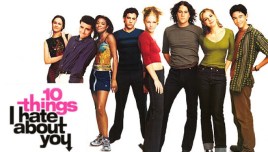 it’s Shakespeare again with the play The Taming of the Shrew, though this time, less misogynistic. Watching these back-to-back, you can easily see similarities between the two and a lot of borrowing on the part of the former from the latter, but the stories are not the same and the telling of 10 Things gives something new and fresh for the audience to enjoy. And that’s really the big thing. It doesn’t necessarily matter if “it’s been done before”, but more so “how a story or idea is being told”. Which leads me to one of my favorite anime of all time: Nichijou.

A few seasons past, I started a podcast with my incredibly handsome friends Owningmatt and the equally handsome GeneralTofu about anime and, specifically at the time, what all shows we were watching. If you’ve seen it (which is quite literally one person besides ourselves so congratulations to you, dedicated fan of a very small anime blog), you might have caught a thirty minute discussion (read: accidental rant) surrounding a show that had come out during the spring 2015 season of anime called Dungeon ni Deai wo Motomeru noha Machigatteiru darou ka or otherwise known as Is It Wrong to Try to Pick Up Girls in a Dungeon? It’s probably an easy guess that this anime was based off of a light novel series with a name that long, and while I haven’t read the source material, the show itself is interesting.
The idea of Dungeon is to take your typical MMORPG anime storyline but make it based in an actual fantasy realm instead of a game. Inside of this realm, heroes fight dangerous monsters in ever more difficult levels of a dungeon most likely constructed by the same architect behind the Wayside School building (shout out to Scholastic Book Fairs). As they explore, heroes collect gems that litter the  different levels. These gems are found inside monsters, with the larger and more powerful gems residing in higher level monsters and more dangerous floors of the dungeon. The heroes use these as a sort of currency by exchanging them for money and resources that they need to continue to take on more and more difficult challenges. Heroes are sponsored by various gods and goddesses who form a higher social class and rely on their heroes’ worship and gem collection in order to grow their power. In exchange, the gods and goddesses give the heroes special powers as well as use their own abilities to assist in the exploration of the dungeon.
The interesting aspects of this show come from the fact that this entire universe is based around the difficult floors of the dungeon that the heroes face. Currency, sports, jobs, etc. are all centered around either the heroes who go into 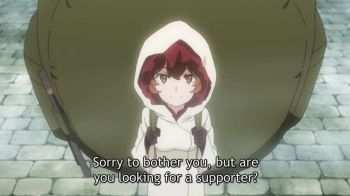 the dungeon or assisting the higher class of gods and goddesses with their daily lives. Even most of the powers the gods exhibit are centered around helping the heroes, with some gods being legendary armor and weapon smiths and others holding monopolies on wine and food trade. There are even jobs surrounding support classes for the hero. Some people are hired to do management and consultation for the heroes, while others are hired to collect gems and hold the different heroes’ items while they fight, sharing a percentage of the profits found.
This show had a lot of potential and though it didn’t live up to it, being a bit run-of-the-mill, sans the very elaborate and creative structure of the world and setting, it was a fun ride. However, the extent of my thirty minute discussion during the podcast was actually not about the plot or setting of Dungeon but on a very central theme that the series explored: The idea of chivalry. Specifically, the idea of courtly love that was spawned by chivalry.
So I’ve finally moved in about one thousand five hundred miles away from where I used to live and have a full-time job with slightly odd hours so it’s been a bit harder to make updates. On top of that, I had a bit of writer’s block while writing this and ended up solving it by starting up a second blog for my own passion project of creative writing at StoryTimeWithMythos. However, I will say that now that I’m moved in and finally have some free time, I’m dedicated to updating for you guys with more interesting articles and the like. The next few articles will be more about specific subjects rather than saluting an anime from my youth as I enjoy those a lot better and feel they’re much stronger discussions.

Even today, one hundred years after the remnants of the pioneers finally explored the frontier and civilization started booming, we’re in love with the idea of The West. The Western genre has covered a historical hundred-year gap from the end of the frontier to today with films and shows that explore the ideas from that time in America. It was that wonderful part of history where those who made a mad dash for land carried a gun, lived by their own hands, and occupied lawless towns near inhospitable and harsh wastelands. It’s not just America that’s been fascinated by this idea either. Many countries around the world have loved to make their own ideas from this setting. In fact, the reason the  famous subgenre of Spaghetti Westerns is called as such is because they were Italian films. Nowadays, you don’t see many westerns being made. Cinema fell in love with the later genres of the 20th century that took hold after the boom of space odysseys in the late 60s through the 70s that changed science fiction from pop serials to the big hit movies of the later decades. However, that doesn’t mean the genre has died out. Recent films like The Good The Bad, and the Weird put their own unique twist on the genre and Clint Eastwood even stepped back into his old shoes to do an oscar-winning and absolutely beautiful revisionist version of the Western in Unforgiven. One of my favorite ideas that has evolved from the Western genre, though, is to take the plot, style, and characters of the Western and apply them to a new frontier to explore. Particularly, in the case of Trigun, I’m referring to the Space Western.
Way better than my try at this idea. If you’ve read my post, definitely read this one as well, as it’s much more detailed and better written.

[First, I’d like to apologise for using a pseudo-meme as the opening image. Second, I would like to forewarn that this post contains mention of sexual harassment and child abuse]
There is nothing wrong with loving fictional characters. When everything else in a story goes to pot, the characters and the emotional attachment we have to them are often what keeps us hooked and allows many a show that would have otherwise run itself into the ground to soldier on. The characters are what we hold dear to our hearts and imaginations, and as they are non-existent conceptual beings created for the purpose of art, copyrights aside, they are in a way ours as soon as they hit the public sphere. I’d say no harm has ever come from loving something, but if you get deep enough into some subsets of fan culture, it can have some weird outreaching connotations.
View original post 1,539 more words

Innovation is an idea that’s a lot harder to produce than what it may seem. Within an industry, you’ll see a significant amount of titles or products that all seem to look the same simply because innovation is difficult to create at all times. However, that’s why innovation and creativity are necessary elements. Without them, stagnation starts to creep in, possibly causing the failure of an industry. It’s weird to think that the anime industry would have this problem, what with hundreds of shows and multiple unique ideas being produced every single year. Even though some may say there’s a decline, numbers show that the anime industry has been happily growing since the 90s with more and and more shows and larger profits being made. However, just like other inevitable phenomena — war, famine, another shitty parody movie that tries to be Airplane but fails — there are times in an industry that creativity and innovation are not as present or simply very much needed. The early 2000s was a situation like this for anime. The industry was just starting to grow after the mega hits of the late 90s, and needed something new in order to inspire others and rocket itself into the massive industry that it is today. A few shows started to display interesting ideas that were based around older series (such as One Piece, Rurouni Kenshin, Gundam), but I would argue FLCL (pronounced “Fooly Cooly”) was that one big thing that had such massive creativity that it showed not only what anime could do, but how the industry could turn from a once blossoming tree, which slowly grows each year, into a gargantuan oak that eats orcs and takes down Saruman in the second act. FLCL is inspirational because the show itself is an inspired work. It wore its heart on its sleeve and showed a massive amount of references and wacky humor while attempting to combine interesting ideas from many different places. FLCL’s philosophy is, in a sense, the same as a monkey’s attempt at art: Throw as much shit on the wall as you can and use what sticks. However, this works so well because what stuck was so polished and great that it didn’t matter if it was the weirdest piece of art a creature could excrete and smear on a wall.
Fair warning, while I try to be unbiased to an extent in my discussions, I feel this one is a bit more opinionated than my other ones. I’m not deeply entrenched in 4chan’s /a/ or other anime communities, so my viewpoint about the terms “waifu” and “best girl” comes from a different perspective. Anyway, I hope you enjoy reading my discussion!

If you’ve ever watched Azumanga Daioh, there’s a hilarious scene where the creepy teacher of the school, Kimura, drops a picture of a beautiful woman from his coat pocket. The students pick it up and comment on how she’s very beautiful and looks like a nice woman, wondering who she might be. The creeper of a teacher suddenly appears from behind them and exclaims in deadpan, broken English that she’s “Mai waifu.” The students freak out, not only over his sudden appearance, but that such a beautiful and charming woman would be married to a suspected pedophile and scary man.
https://www.youtube.com/watch?v=0AgDbAT56I0
Originally, the terms “waifu” and “hazu” were borrowed from English in the early 1980s in order to better define modern marriage in Japan as the original Japanese term for wife, “Kanai”, means “inside the house” and the term for husband, “shujin” or “danna”, means “master”. Obviously outdated, “waifu” and “hazu” were adopted to show a modern expression of equal treatment. While Japanese otaku definitely would have used the term before, fans of the show Azumanga Daioh thought the juxtaposition of a possible pedobear with a wonderfully nice woman, as well as the teacher’s broken English response, were so funny, the term “Mai 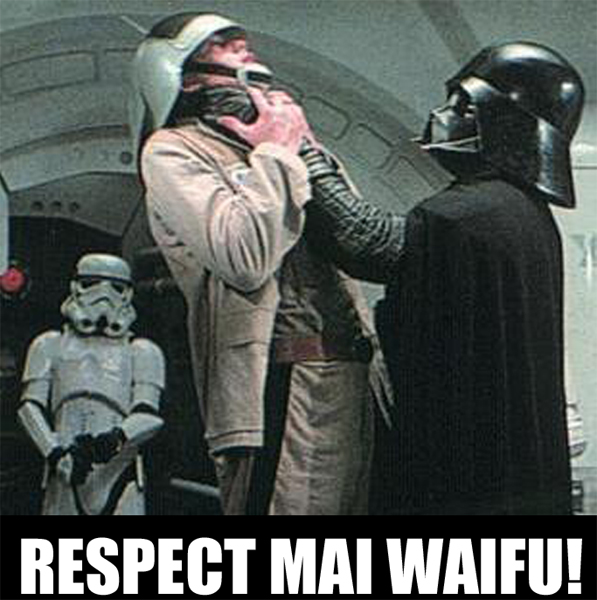 Waifu” came to become a meme for the people of the Internet. The term means that a female character a person enjoys is so loved by that person, they claim to be “married” to them. People have also used it to refer to their favorite character in general, disregarding gender and including male characters in a humorous, but endearing way as also their “waifus” and sometimes “husbandos”. While for some, the level of love towards their fictional character is just a fun aside to their own lives, many on the Internet latched onto the idea of having an actual love interest in their two dimensional favorite characters. This in itself is not bad as I feel we’ve all been there to certain extents. I know I personally love at least half of the main characters Joss Whedon has ever written and, given the chance, I would absolutely date Malcolm Reynolds from Firefly and I’m a hetero male. However, it’s important to note that these fantasies can be taken too far.

Every now and then, the anime industry loves to poke fun at itself. Sometimes, this self-awareness from the industry is like Watamote (the real name is way too long to type), where it makes us uncomfortable with how accurate it is to our own awkward lives, basking in our memories of awkward situations and episodes, completely departing from realism to the chagrin of those around us. However, other times, the industry uses a softer approach, taking our wonderful memories of reveling in our nerd culture and both poking fun and celebrating their importance to us. Genshiken and Genshiken Nidaime are anime of this latter approach. Genshiken or, as it’s subtext defines it, The Study of Modern Visual Culture is a manga/anime about a college club of the same name and their experiences loving, hating, and discussing all of the merits of otaku culture. The series takes all of the games, anime, manga, etc. that we know (as well as some fakes ones it invented so wonderfully that they were spun off as their own anime) and takes pride in using their likeness for comedic and celebratory effect. In fact, a surprising thing from this series is that it doesn’t just parody other anime, games, manga, etc. with alternative names or other ways to get around copyright. For most references, the series straight up calls out the names of the anime and shows actual gameplay of certain games. Genshiken was always very upfront about what it referenced and used each name or character from a different series as a badge of honor, showing how the creators, like their readers, were also otaku of a high pedigree.
All right, so Madoka was a serious and depressing topic last time, so I thought I’d go with a pick-me-up for this next discussion. So! Let’s talk about my favorite hilarious troll moves I’ve seen from anime. Now these are just my five favorite trolls that I wanted to point out, and I’m limited by what I’ve seen, so I won’t make this a list of “The Top Five of All Anime” or anything that conceited. Also, another limitation on this list is that I’m only including what I consider as funny  trolling in anime, i.e. playing a joke on the audience for a bit of fun, rather than for a sudden plot twist in the story that changes everything, or a scene that is a big middle finger to the fans such as Sword Art Online S1 and its main antagonist’s final spiel. (Also, I’m looking at you, OreImo. The lesson here is if you wanna write a story, but your publisher doesn’t want it written the way you want, get a new publisher.) As such, I’m also excluding any major plot twists from anime that greatly influence the story, such as Madoka: The Rebellion Story or other twist endings that change everything in general. These are all great, but they deserve their own discussion since the anime industry really loves to take a left turn towards the end of their series, whether they need to or not. Since this isn’t including any major plot twists that dramatically change a series, this discussion will actually be relatively major spoiler free, but we will be going over material that’s in the middle to end of some anime so SPOILER ALERT if you care about minor spoilers for a series. Now, let’s get this crazy hootenanny, shindig started!

Let’s talk about genre for a second.
Now bear with me, I’ll get to the fascinating twists and the dark plot of Madoka Magica soon, but I want to get a little information across first. For film genres, or any art form for that matter, there are a few different stages that a film can go through. Generally, it starts with an Experimental Stage, where the genre is starting out and the rules haven’t been made just yet. As an example, think of westerns before they all typically started having one man for good facing off in a high noon duel against the bad guy.
After they finally establish what works, the Classical Stage begins, which is where all of the tropes and ideas generally come from. Eventually, people get tired of those tropes, though, and start the Parody Stage. For westerns, this was Blazing Saddles. This stage makes fun of the over-used tropes that start to appear within a genre.
Finally, we get to one of my favorite stages: Revisionism.
Continue reading

 The Backloggers