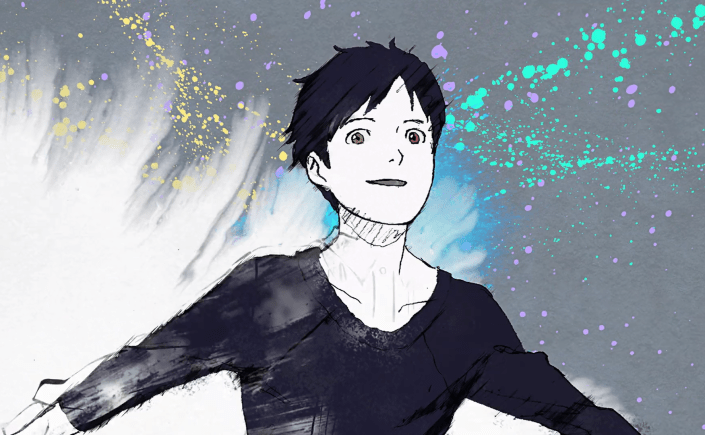
A Brief Look at the Fall 2016 Anime Season

Before we get into the post, I have to give a big shout-out to my ISP (who shall remain unnamed) for all their amazing work making sure my internet connection stays up and stable when I really need it to. Thanks, guys. You didn’t screw this one up at all.

Seriously, though, I hadn’t initially planned on writing a post about my shows I’m excited to watch this season—initially, I was simply going to share my thoughts during the Log Time General Podcast #2, which if you haven’t given a listen, you absolutely should. It’s filled to the brim with some fantastic discussion about some of the earlier episodes of this season’s shows, all nicely wrapped up in sweet, sweet banter between Mythos and Owningmatt (and myself, for all of about twenty minutes).

With that in mind, I should go ahead and mention that this is in no way meant to be an exhaustive preview of this season—due to the technical difficulties during the recording of the podcast, I still had some things I wanted to mention about the few shows that I definitely plan on watching this season; thus, here we are. So let’s get started.

Continue reading

Are the Game and Reality Separate?: Talking About Netoge and Online Identity

I can’t seem to count how many times I heard the phrase “reality and the game are separate!” while watching Netoge no Yome wa Onnanoko ja Nai to Omotta (or just Netoge for short). For those unfamiliar with the show, Netoge is a light novel adaptation following high school student Hideki Nishimura and his Alley Cats Guild friends in their Net Game Club. Hideki Nishimura and Ako Tamaki, the central protagonists, have strong, differing views of how they exist in and outside of their MMO of choice, Legend Age. Ako sees the world of the game and “reality” (let’s call them the digital world and the physical world, respectively), as one in the same. Hideki sees it as the opposite: that the physical and digital worlds are separate. Although I don’t think either of them really hit the issue square on the head, and the show tends to skirt around any conversations about this that could be pretty cool or enlightening, I’m actually inclined to agree with both Ako and Hideki to some degree.

Continue reading

Chickens Don’t Make Good World Leaders: Why the Fairies Can Replace Humankind in Humanity Has Declined

If you have watched Episode 10 of the Log Time Podcast, or have any semblance of familiarity with the series Jinrui wa Suitai Shimashita (also referred to as Jintai) you’re more than likely familiar with the Fairies, the pint-sized figures of great power and importance within Jintai. Considered in some regards to be mythological, the Fairies are very real, very present, and admittedly, very goofy forces of nature. As humanity slowly plods on towards its seemingly inevitable demise, the Fairies have been considered by some, namely Watashi and her Grandfather, to be the “new humanity.” They are humanoid, capable of the creation and utilization of advanced tools, even magic, and are generally an amiable species. It seems that for these reasons and others that the Fairies have been conceptually considered to be the theoretical successors of mankind on earth. Considering them humankind’s successors brings up other questions, namely that of the reason behind mankind’s stepping down, so to speak. We already get a basic sense of this from the title, roughly “Humanity Has Declined.” We understand that humankind is on its way out, as Watashi states, but we are unsure of the specifics of how this decline came about. Watashi alludes towards a decline through frivolity and decadence – through waste and overconsumption. We have causes, but not any specific instances of what brought about the downfall, and as a result, we are left to consider several factors – perhaps the largest of which is “why the Fairies?” Why are they being passed the torch? There’s as many possibilities as there are people with opinions out there (and that’s a bunch), but I’ve picked out three that came to mind and seemed like interesting points to consider. This is not to say that these are the “most valid” or best possibilities, of course. This is more just a collection of thoughts spawning from my question “Why?”

Continue reading

Acknowledgement and Denial in Haganai NEXT

I’m not entirely sure what compelled me to watch the second season of Boku wa Tomodachi ga Sukunai NEXT (popularly shortened to Haganai NEXT). Haganai’s first season was an intriguing invitation into the world of the Neighbors Club at St. Chronica’s Academy, fronted by Kodaka Hasegawa, Sena Kashiwazaki, and Yozora Mikazuki. The show itself has all of the trappings that you would expect of a comedy-harem-school-romance-slice-of-life, and though I can’t say that I disliked the show, I can’t really say I cared much for it, either. I can at least say that, if nothing else, the show crafted a cast of characters that stood out in my mind some time after I had finished watching the season. It is perhaps because of this – that I cared for the characters but not the show itself – that I decided to give the second season a shot.

Unsurprisingly, the second season was largely more of the same – oversexualized high-schoolers, misunderstandings, and a whole lot of Kodaka being his protag self and missing every romantic advance that his female counterparts sent his way. Honestly, the second season’s pacing and timing of jokes was an improvement over the first, yet there were still moments where I found myself wondering “do I really want to keep watching this?” It was not until episode 10, “The Sad-Case King and the Stone-Cold Story” (“Zannen Ō to Waraenai Hanashi” [残念王と笑えない話]), that I stopped asking myself this.

Continue reading